

Some Other Work I Did...

It’s official, ladies and gentlemen. The Pioneer has gone freelancin’. I’ve taken the reigns of a brand new newsletter. It comes from popular Venice cold foam haunt, Saba Surf and Coffee. Now I won’t push all of these into your inbox, and if you are part of the bi-coastal elite ruling class that reads The Pioneer on the Substack app, I apologize as you might have already seen this. But I’ve attatched my first piece below. I wrote it about couches, community (tote bag of a word), and most importantly myself. Enjoy.
Oh and skip right past it if you wanna see my Pioneering Fit of the Week™.
Our Coffee Shop Has Couches
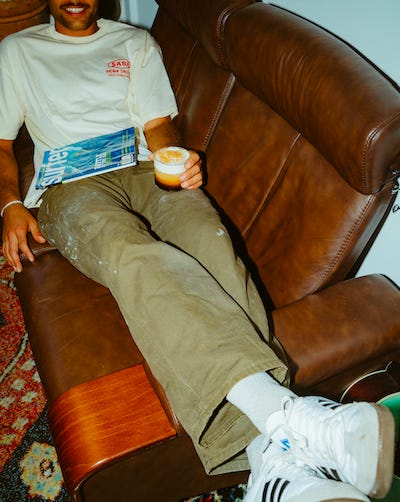
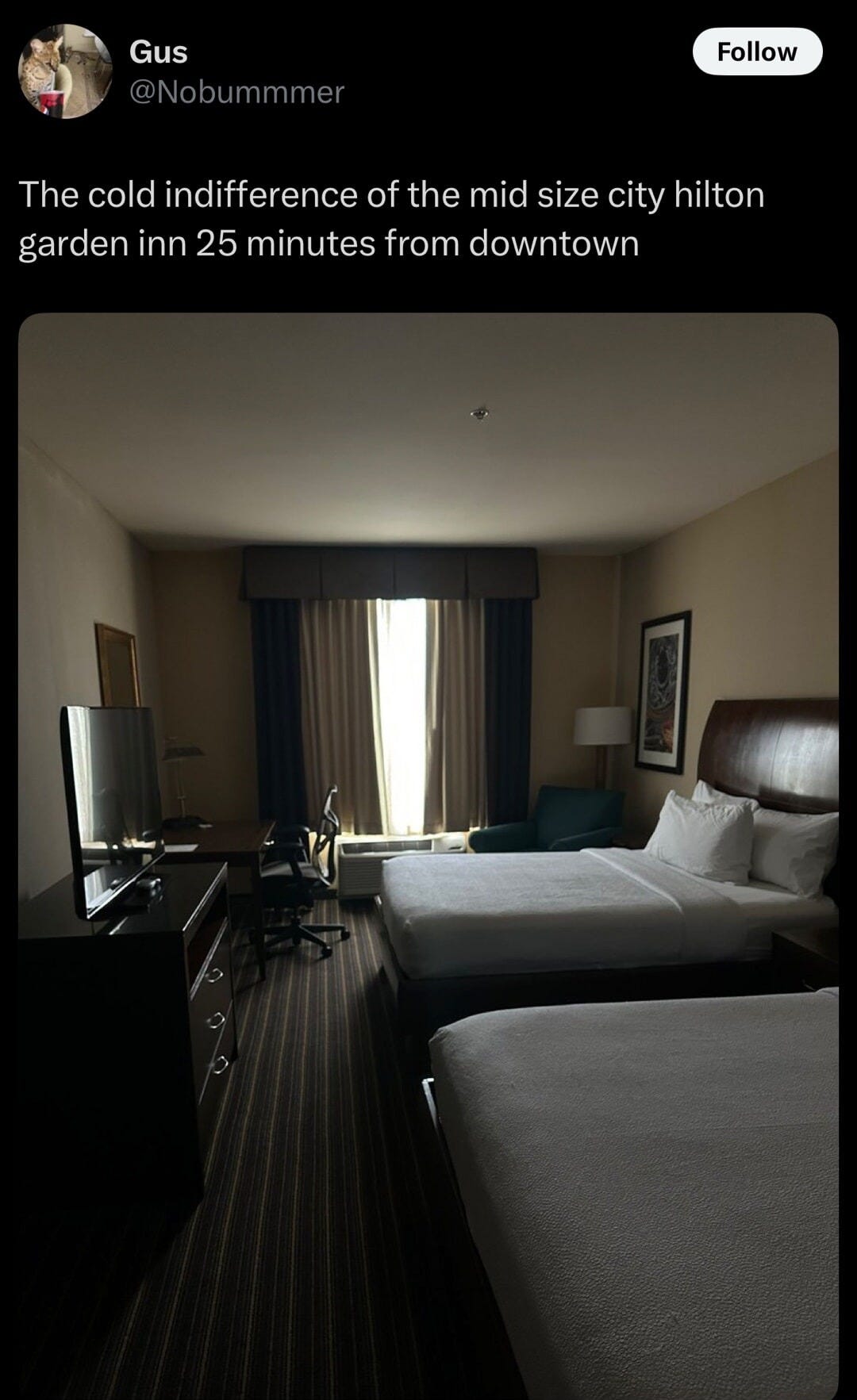
Sometime in 2025, my friend Marco asked me to meet him at a new coffee shop on Venice Boulevard. After inevitably walking into Saby’s, our next door neighbor and sacred keeper of the breakfast burrito secrets, I stepped into Saba for the first time. Marco was at the front of the shop. He was sitting on a couch….A piece of furniture which was the first of many features that threw me off my axis. Saba lacked the minimalistic monotony of where I was accustomed to pairing a cold brew/splash of cream with the false promise of laptop work. It was not, as Kyle Chayka describes in his excellent 2024 book Filterworld: How Algorithms Flattened Culture, a stock and scaled cafe with “plentiful daylight through large storefront windows; industrial-size wood tables for accessible seating; a bright interior with walls painted white or covered in subway tiles; and wifi available for writing or procrastinating.” Chayka theorizes this millennial milieu is one of the many products of algorithms shaping the world around us. If say, Instagram or Yelp favors a Kubrick-spaceship-looking coffee house in Park Slope, it will most likely recommend one similar in Sydney. The look is then replicated by a new shop owner in Reykjavik, and so on.
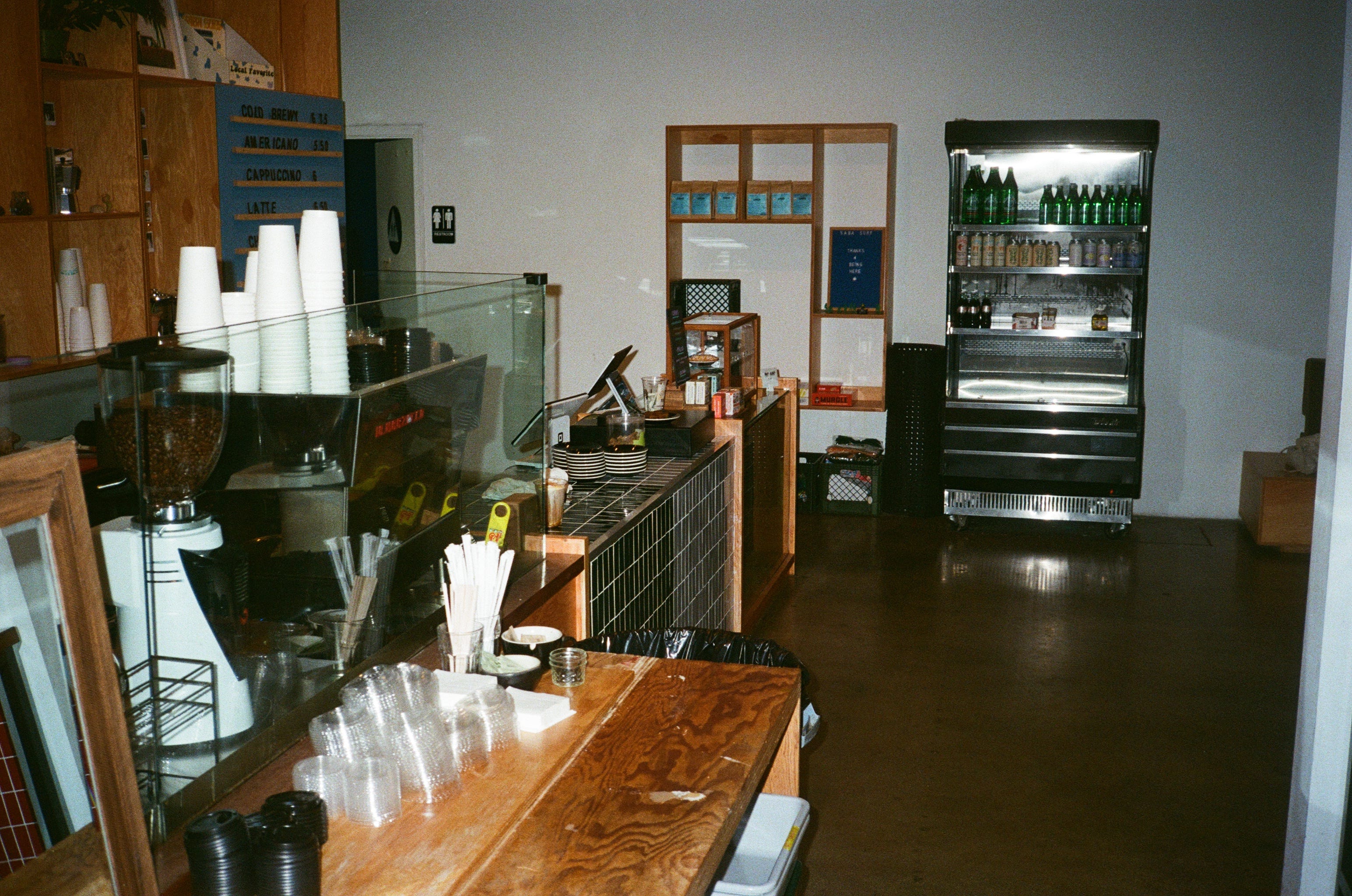
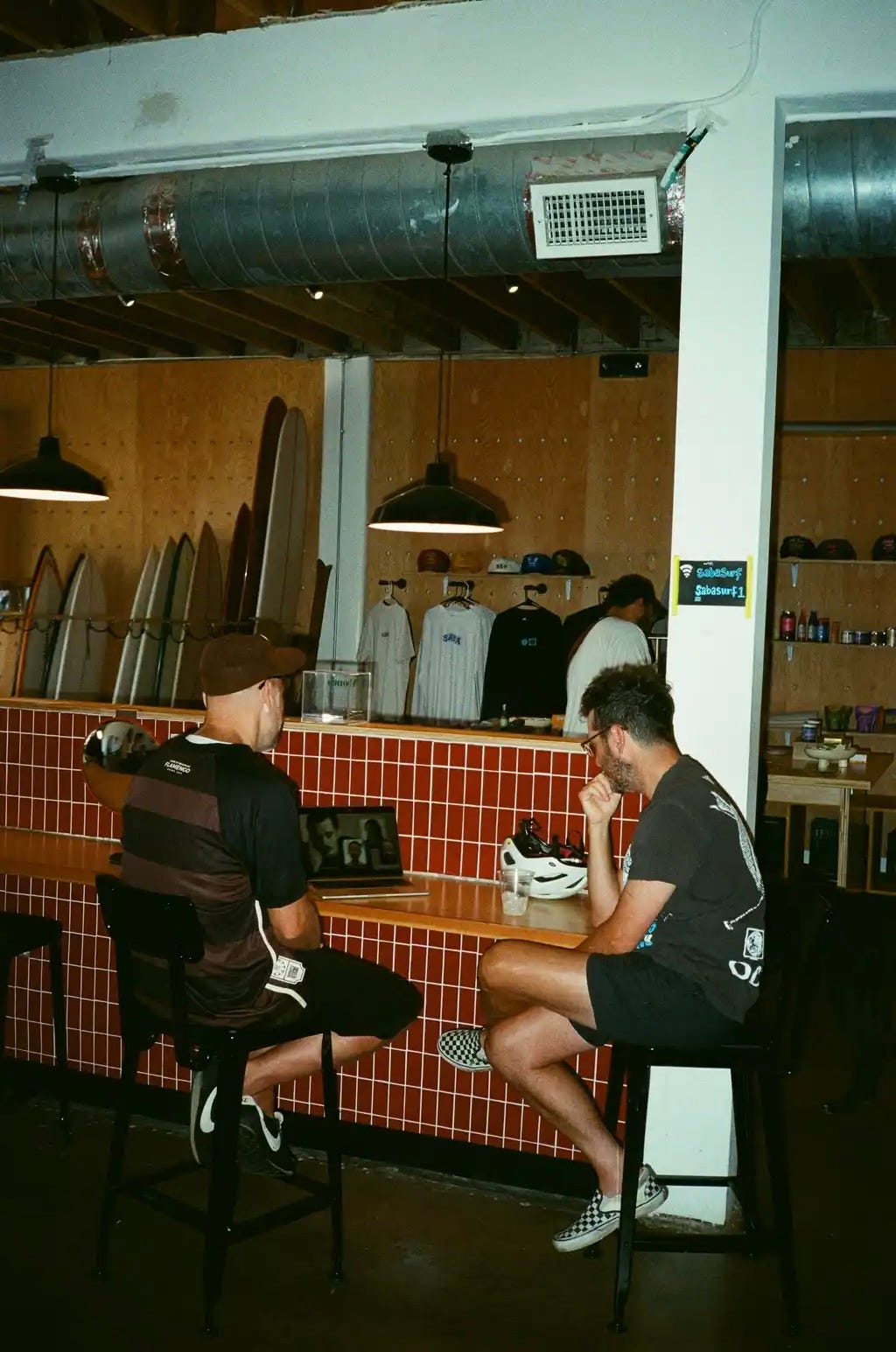
But back to my morning with Marco. Back to Saba. The supposedly new coffee shop on Venice Boulevard that looked as if it had been there for 25 years. To Mr. Chayka’s credit, there was some tiling. And of course, wifi was available for said procrastinating. But nothing about Saba felt…minimalistic, dystopian, or robotically efficient (if I’m allowed to go there without taking a shot at the wait time for a Breakwater). The tiles were an earthy maroon and clearly placed by hand. The wifi password was written in sharpie and taped to the wall. Surfboards hung from the ceiling along with merchandise, draped across slats of unfinished wood. Most importantly, Marco was stationed on a rather large brown leather couch. It was one of three that sat in the shop, atop rugs and behind tables covered with old surf magazines. But is that all it took to separate this new shop from the copy and paste world we live in? What about this plush leather could have tickled my local fancy?
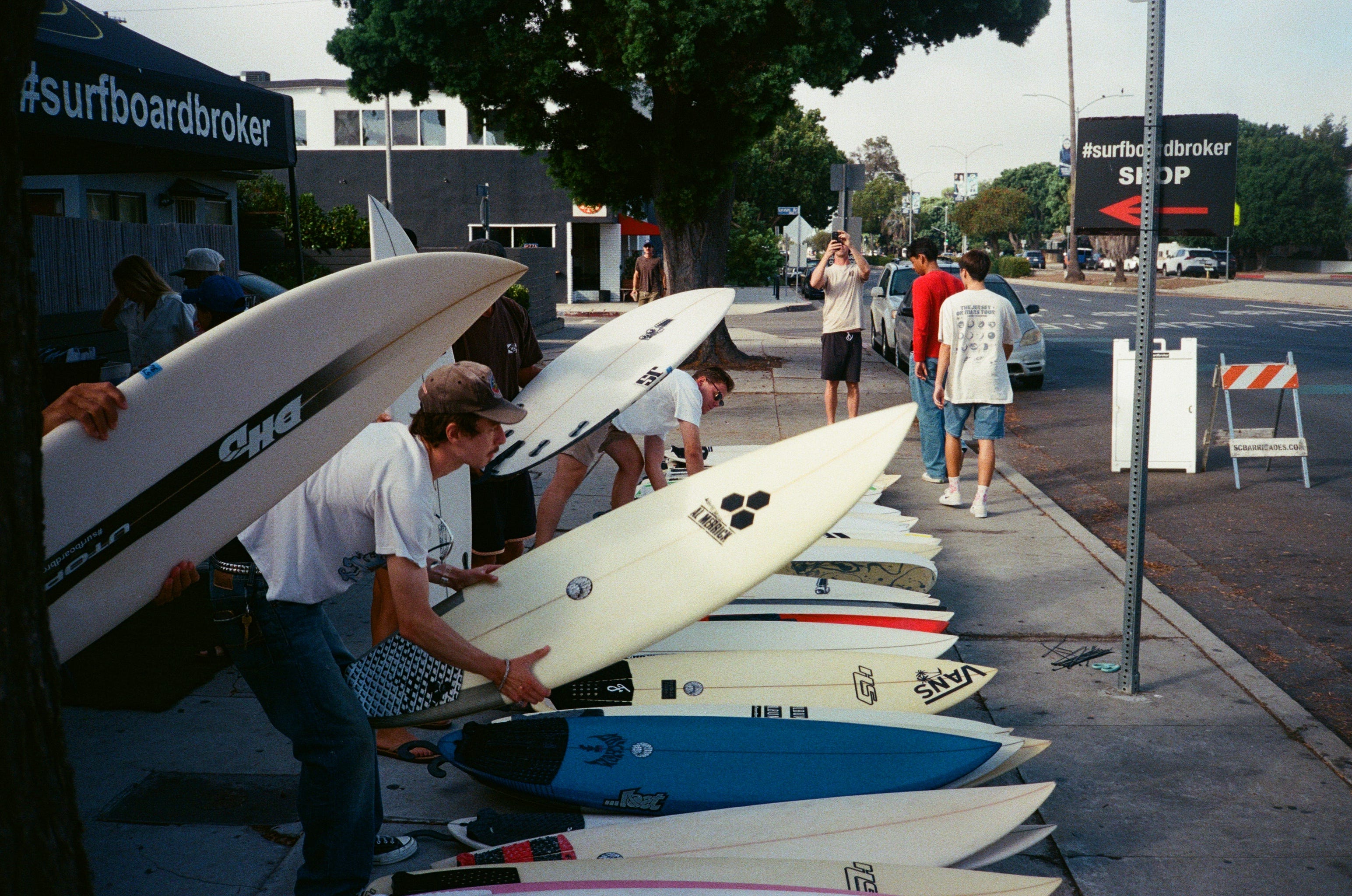
I knew it wasn’t just Saba’s “surfy aesthetic”. I don’t even surf. Nor do I use the word “aesthetic”. But I have read one surf memoir, Barbarian Days by William Finnegan (book rec number two…come at me). And from what I can surmise, surfing is all about presence. Dialing in. Understanding out in Big Blue, no two waves are the same. Local to the here and the now, one’s mission might never be to strive for volume, but instead catch the ultimate ride (alright that’s from Point Break). Not to be dramatic, but that’s how I felt sippin’ my naughty little cold brew and sitting on that damn couch.
In Filterworld, Chayka references the work of French philosopher Marc Augé, who similarly studied how larger spaces such as airports, highways, and hotels began to look similar across the world by the end of the 20th Century. Augé coined these environments as Non-Spaces. Places where “people are always, and never, at home.” It’s no longer just airports and hotels. Suddenly everything in our neighborhoods feels as if it was built for the entire world. But breaking from the norms of non-spaces requires a leap of faith into the unknown abyss of taste and instincts. Does a new shop on the street have it? Or would it have been better to rely on what hasn’t failed before? A good place to start is focusing on the neighborhood it serves.
Maybe that’s why this couch warred against a world flattened by Yelp (but snake us a thumbs up when you’ve got the chance). It is not ergonomic, efficient in space, or easily replicated. It’s loud and obese. It takes up the room of 8 linebackers while only seating two. But most importantly, a couch like a wave (I’m only assuming), favors presence over purpose. Marco and I were in no such non-space. No longer in a coffee shop built for the universe and the screens through which we view it. Saba was built for Venice, the beachside neighborhood it resides in. The neighborhood Marco and I live in (Marco’s in Palms but just go with it). It lacks skylights, white brick, and rows upon rows of hard stone benches. Instead, there are couches.
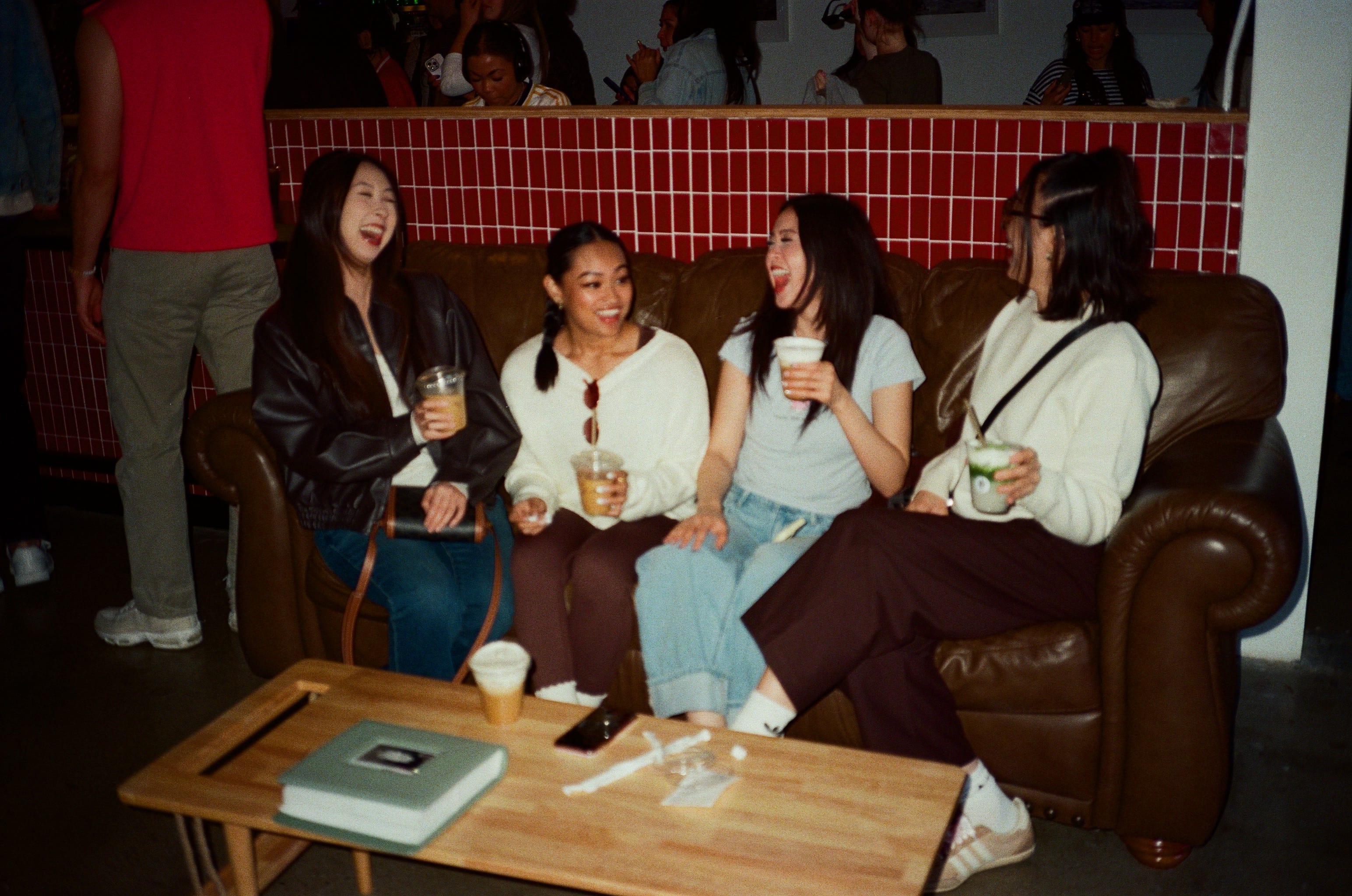
Or maybe this whole thing’s just cyclical. After all, they sat on a couch in Friends…
Regardless, throughout this newsletter, you’ll hear more stories about our neighborhood, your fellow regulars, and those just passing through town. Like the tote bag you bought with your flat white, we hope these stories stay with you long after the foam settles. Some are already calling this the couch of newsletters. Just what I’m hearing.
So until then, keep taking note of what makes the world around you your own. We will too. One Breakwater at a time.
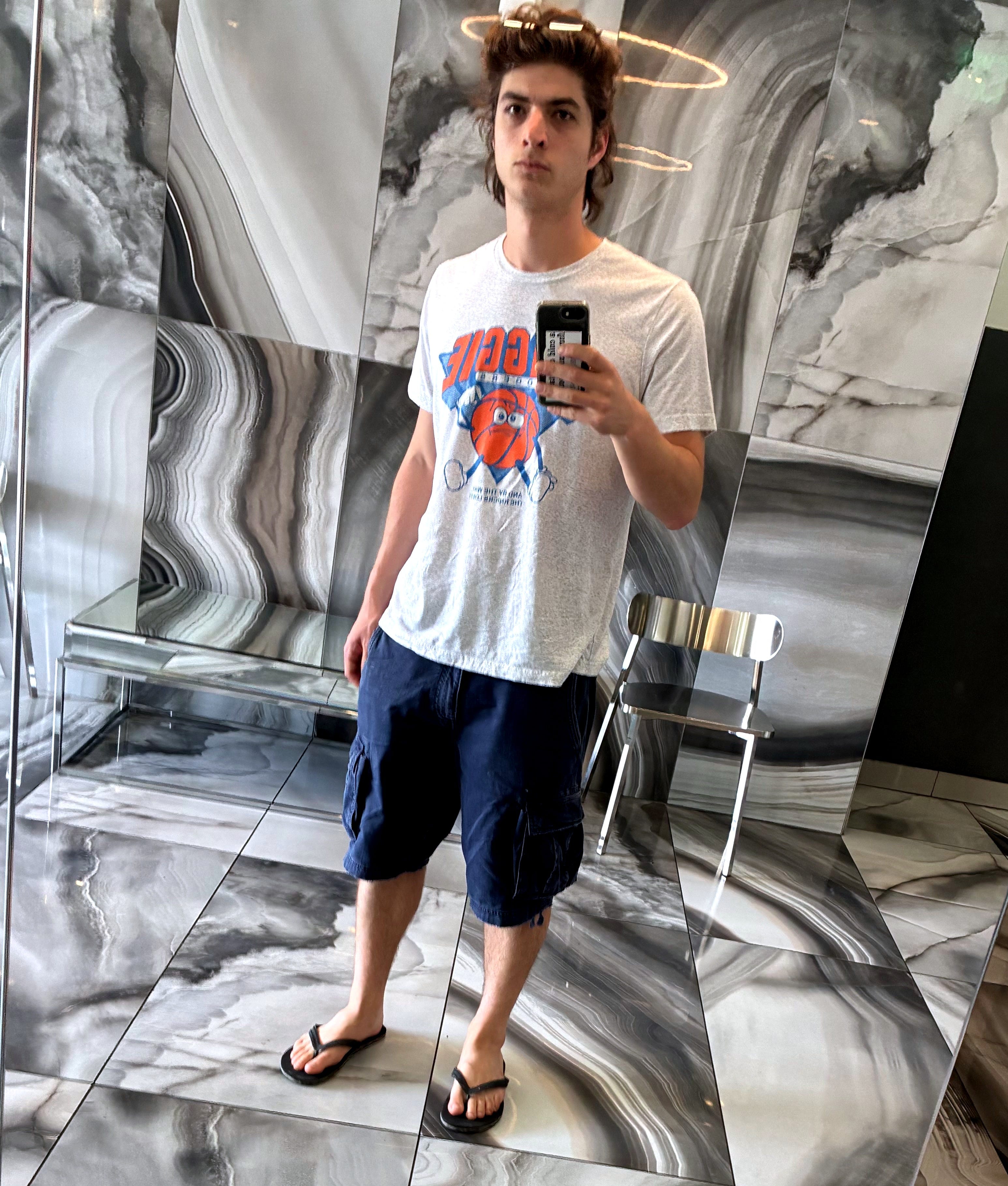
Pioneering Fit of the Week™
Target flops. Gap 11" inchers. Maggie Rogers/Knicks concert shirt. Shades from a convenience store in Rome.
Pls discuss. Ciao for now.
just closed Barbarian days a few weeks ago. What a recommendation
I like the Steve Harrington-esque hair with a halo.